

WHAT I WANT YOU TO LEARN FROM THIS LESSON
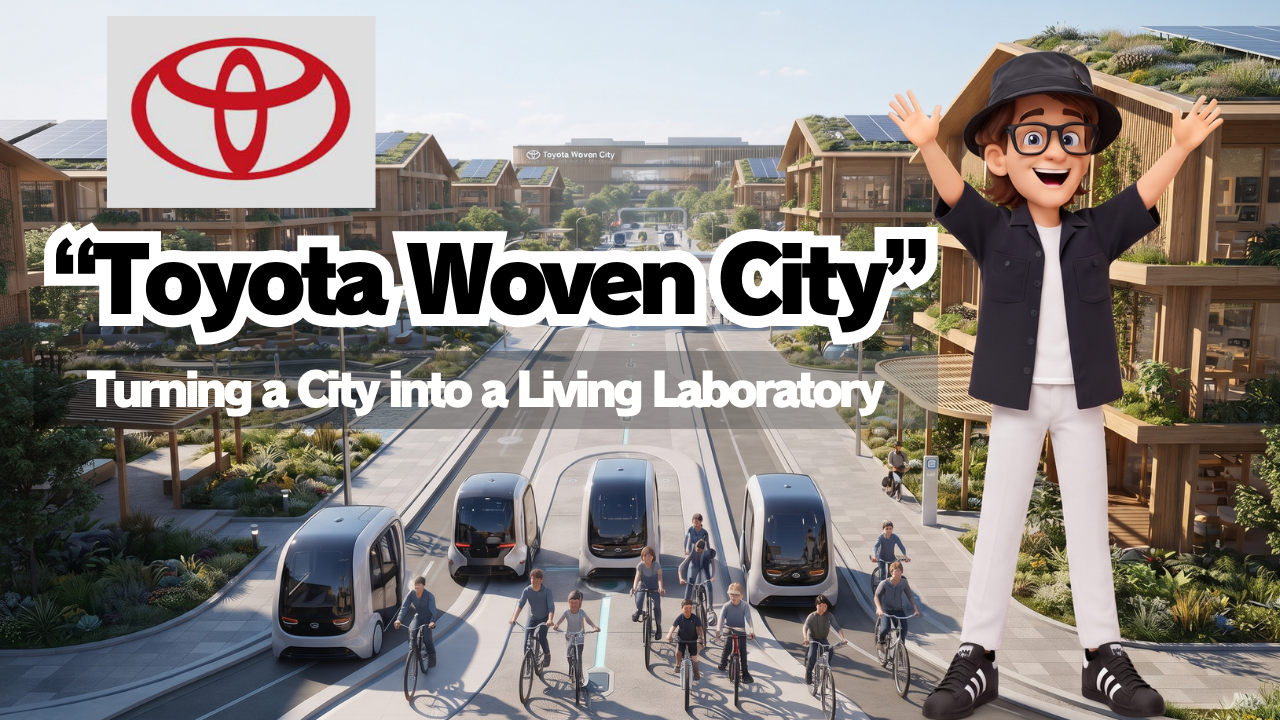
In this lesson, we will look at Toyota’s Woven City project in Susono, Shizuoka Prefecture, and think about how companies can create the markets of the future.
What makes Woven City so interesting is that Toyota is not simply developing new cars. The company is taking a much bigger approach: turning an entire city into a place for experimentation. In a real community where people actually live, Toyota and its partners can test and improve new technologies and services involving mobility, AI, robotics, smart homes, energy, and more.
The key lesson is that companies cannot grow forever simply by asking, “How can we sell more of what we already make?” They also need to ask, “What kind of company do we want to become in the future?”
For Toyota, that means moving from being “a company that sells cars” toward becoming “a company that supports how people move and live.”
The same idea can be applied to fashion. A fashion company can move from “selling clothes” to “creating new lifestyles.” By collaborating with other industries, testing ideas on a small scale, and developing successful experiments into real businesses, fashion companies can create entirely new opportunities.
※ YouTube ※Podcast ※discord ※substack ※X